



Before You Rent the Lift: Check the High Bay Mounting Hardware
A high-bay fixture is not installation-ready just because the box contains a hook or chain. The supplied part still has to connect to the building structure, support the exact luminaire, fit the electrical transition, avoid nearby obstructions, and remain serviceable after racks and equipment are in place.
This is where warehouse quotes become hard to compare. One vendor lists only the luminaire. Another includes a hook, cord, and restraint. A third assumes the electrical contractor will furnish everything above the fixture. The prices may look comparable while the installation scopes are not.
Before releasing the purchase order, make every bidder complete the same six-line mounting schedule. If a line is blank, treat it as an open scope item—not as “probably included.”
Build the six-line mounting schedule
Use one row per fixture type and mounting condition. A warehouse with open joists, finished ceilings, mezzanines, and rack aisles may need several rows even when every luminaire is the same model.
Hook eye, threaded hub, yoke holes, V-hooks, cable points, or another approved interface.
Hook, chain, aircraft cable, pendant, surface bracket, or a model-specific kit.
The project-approved connection between suspension and verified structure.
Required restraint, attachment points, and the party that furnishes it.
Cord or whip, connection point, strain relief, control leads, and responsibility.
Lift type, route, working height, shutdown window, and future removal method.
Safety boundary: this checklist does not select anchors or approve structural capacity. Qualified electrical and structural professionals must verify the attachment, wiring, restraints, clearances, and applicable requirements for the actual building.
UFO and linear high bays start with different assumptions
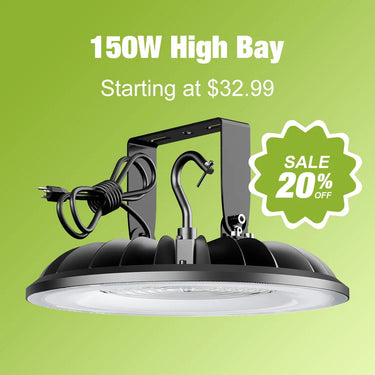
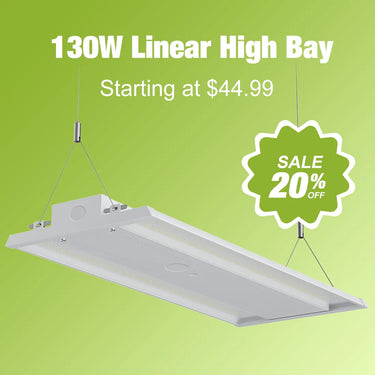
The current YXL HBUFO product page shows a portable hook, while the current YXL Basic Series linear high-bay page describes an included hanging chain. Those statements identify fixture-side hardware on the displayed product pages. They do not define the complete attachment to your building.

A round UFO commonly begins with one central suspension interface. A linear fixture commonly requires two suspension points so the housing stays level and oriented. That difference affects layout tolerance, leveling work, the number of building attachments, and what the installer must coordinate above each fixture.
When a hook is not the whole answer
A quote that says “hook included” still leaves practical questions. What receives the hook? Is that receiving point present at every layout coordinate? Does the exact luminaire need a separate restraint? Can the cord or whip reach its connection without strain? Could the suspended fixture move into structure, ductwork, or equipment?
When “chain included” is still incomplete
For a linear fixture, confirm chain quantity and length, fixture-side connectors, building-side connectors, adjustment method, attachment spacing, leveling procedure, and the relationship between suspension points and the approved layout. A bag of chain is not a coordinated support system.
Do not transfer hardware assumptions from one series to another. Obtain the current manual and installation instructions from the relevant product-page DOWNLOAD section, match them to the exact ordered model, and list every accessory by manufacturer part number when available.
Level competing quotes before comparing price
Ask every bidder to complete the same table. Use included, contractor-furnished, owner-furnished, or not applicable. “By others” is incomplete unless the responsible party and item are named.
| Quote line | Bidder must identify | Evidence | Common unresolved gap |
|---|---|---|---|
| Fixture interface | Exact hook, hub, bracket, cable point, or V-hook | Model-specific manual and packing list | Photo shows hardware, ordered SKU is not confirmed |
| Suspension | Type, quantity, length/range, finish, source | Accessory part number or contractor schedule | Drop length is assumed from roof height |
| Building attachment | Verified structure and approved connection | Project detail reviewed by qualified professional | “Existing structure” is not identified on plan |
| Secondary restraint | Required item, attachment points, furnisher | Exact manual and project requirement | Cable is shown but not included in price |
| Electrical transition | Cord/whip, connection, controls conductors, strain relief | Submittal, wiring diagram, electrical plan | Fixture cord cannot reach the planned point |
| Access | Lift, route, shutdown, staging, future removal | Site survey and coordinated ceiling plan | Mounting point is unreachable |
Only compare installed cost after the rows are aligned. The lowest fixture price can lose its advantage when missing suspension kits, attachment work, electrical transitions, additional lift time, or a return visit are added.
Write an exception log instead of hiding uncertainty
Not every condition will be resolved at bid time. Record each exception with four fields: drawing location, unresolved question, responsible reviewer, and required decision date. Examples include an inaccessible roof bay, unknown joist capacity, pendant length awaiting final equipment height, or a control box that conflicts with a proposed suspension point.

Keep the log beside the warehouse ceiling obstruction map. The obstruction map says where a fixture can go; the hardware schedule says how the approved fixture will connect there.
A useful exception is specific.
Write “Grid C-7: pendant length pending clearance above conveyor; mechanical contractor to confirm by October 2,” not “coordinate in field.” The first note can be closed. The second follows the project all the way to the lift.
Do not release the order until the package passes five gates
- Identity: each hardware item matches the exact fixture model and revision.
- Completeness: every part between the luminaire and verified building structure has an owner.
- Electrical fit: cord, whip, connection point, controls conductors, and accessories are coordinated.
- Location fit: the support arrangement works at repeated and exceptional ceiling conditions.
- Access fit: installation and future service remain possible with the completed warehouse layout.
If any gate fails, hold the affected line item or document the approved exception. A substitution after release should trigger the same review again; a fixture that looks equivalent from the floor may use a different mounting interface, weight, cord arrangement, or accessory set.
For a project-specific review, send YXL the dimensioned floor and ceiling plans, mounting heights, structure types, obstructions, fixture candidates, voltage, connection preference, control intent, and keyed ceiling photos through the lighting layout service. Final attachment and electrical design remain the responsibility of qualified project professionals.
Sample Image Gallery


